
What to take from this
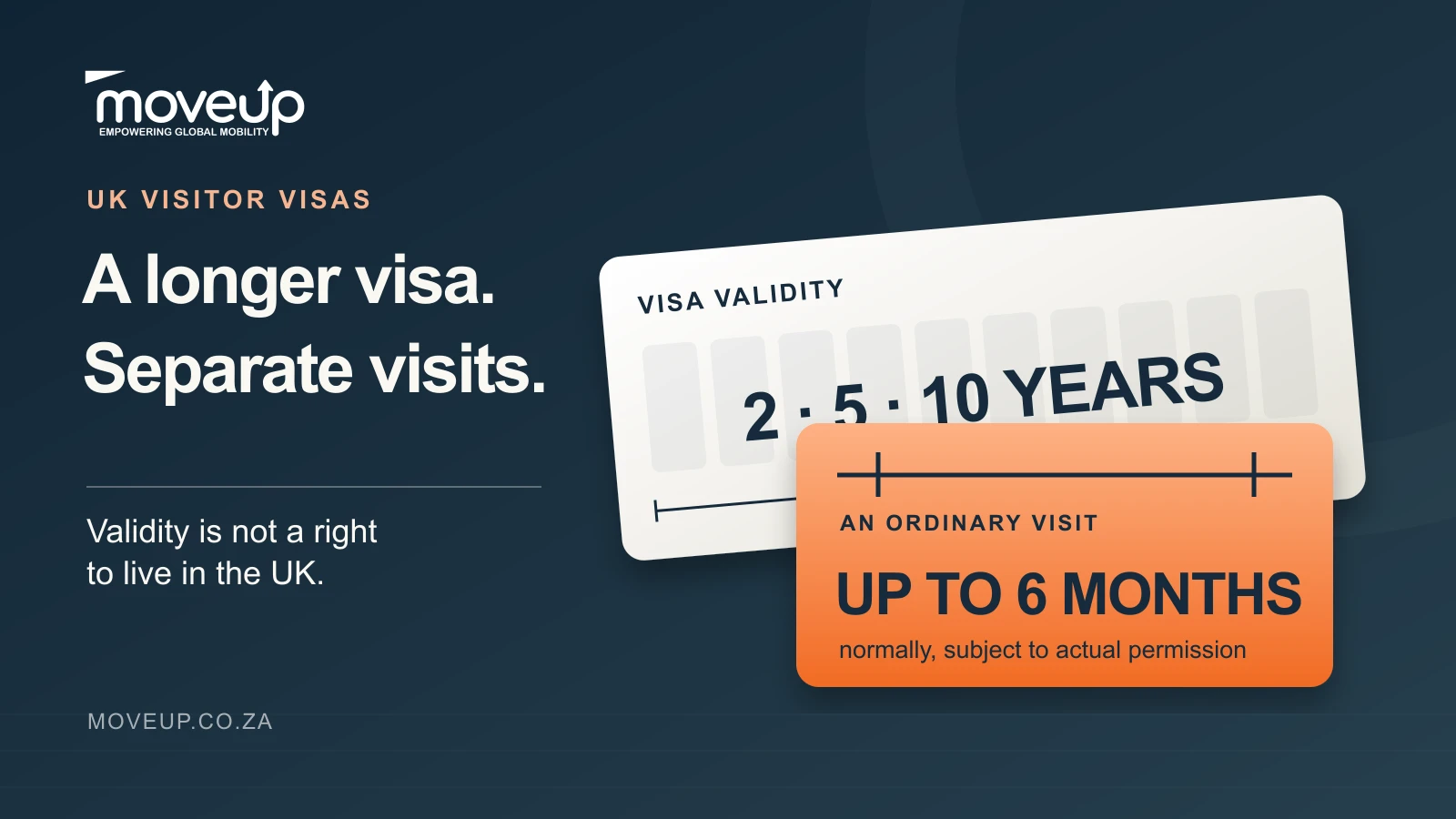
- A two-, five- or ten-year visitor visa's validity is different from the permission for each visit.
- Ordinary family visits are normally limited to up to six months; the actual permission and conditions govern.
- Frequent or successive visits cannot be used to make the UK your main home; there is no blanket six-in-twelve safe harbour.
A ten-year UK visitor visa is not permission to spend ten years in the UK. If you are planning family visits from South Africa in 2027, separate the visa's validity from the permission for each stay—and consider how the visits fit together.
Perhaps you hope to see a new grandchild, return for a graduation and spend another Christmas with family. A longer-validity visa may be worth discussing for repeat travel. The useful starting point is still your actual plans: what each visit is for, how long it needs to be and where you normally live.
Two different questions sit behind the dates
Visa validity concerns the period during which the visa can be used, subject to its conditions. Permitted length of stay concerns how long you may remain on a particular visit. A later visa expiry date does not turn that visit into a continuous multi-year stay.
The official long-term Standard Visitor visa guidance describes visas with two-, five- or ten-year validity and a maximum of six months for each ordinary visit. Applying for a longer-validity visa does not guarantee that duration will be granted.
| What you are checking | The practical question |
|---|---|
| The visa's validity | During what period, and on what entry conditions, can this visa be used? |
| The permission for this stay | By what date must I leave on this trip? |
| Your overall travel pattern | Do the plans still describe temporary visits, rather than living in the UK? |
Six months is a limit, not an automatic allocation
For an ordinary family visit, the usual maximum is six months. Follow the actual permission and conditions that apply to you; do not assume every arrival gives you six months or that holding a valid visa guarantees admission. Appendix V: Visitor separates visa validity from the permitted stay and requires the visitor requirements to be met.
Special provisions for certain academic or medical visits are separate questions. They do not create a general longer-stay option for family visits. For the broader explanation, see our UK visitor visa duration guide.
Repeat visits need a convincing temporary purpose
The visitor rules require you to intend to leave after the visit. They also prevent using repeated or closely spaced visits to live in the UK or establish it as your main home. A ten-year visa does not remove those requirements.
Consider two illustrative planning examples, not client cases or eligibility decisions:
- Separate family occasions: a proposed three-week Easter visit and a later two-week graduation trip can be explained as separate occasions. That description is not an approval prediction; the wider facts still need to support the application and each journey.
- Most of the year away: someone planning a lengthy UK stay, a brief return to South Africa and another lengthy UK stay needs to examine the overall pattern. Staying within the limit on each trip does not, by itself, answer whether the UK is becoming their real home.
Do not replace that assessment with a “six in twelve” rule
The Home Office's guidance on repeat visits does not impose a blanket six-month total in every twelve-month period. It directs decision-makers to examine the wider travel pattern and circumstances.
That is not a loophole or a promise that a particular schedule is acceptable. Equally, a day-count total alone does not settle the question. A short trip outside the UK should not be treated as a guaranteed way to reset visitor permission.
Build your 2027 visit plan around five questions
- Why this trip? Write down the occasion, who you will visit and what you expect to do.
- Why this length? Choose dates that match that purpose, rather than starting with the longest stay you might request.
- What supports the costs? Set out the travel, accommodation and everyday spending plan, including any family contribution.
- What happens afterwards? Explain your intended return and the commitments and arrangements that make sense of it.
- What does the full calendar show? Put previous and proposed UK visits on one timeline. Include time at home as well as time abroad.
This is a preparation checklist, not a points test or a list that guarantees an outcome. It gives you a clearer account of the plans you want assessed.
When visiting becomes a different conversation
If the underlying plan is to move in with family, make the UK your usual home or undertake work beyond permitted visitor activities, discuss the appropriate route before relying on a visit visa. Family connections can explain a visit; they do not turn visitor permission into residence permission.
You do not need to decide the right route from a headline or count of days. Start with the life plan, then check whether visitor permission fits it.
Discuss the visits you actually want to make
Move Up can help you put your intended trips into context. Begin with our UK visitor visa guidance and use its existing visitor risk and readiness check to share the relevant facts. Bring your proposed dates, earlier travel history and the reason for each trip.
This is an evergreen planning distinction, not an announcement of a new visitor policy. The applicable rules and your own permission should be checked when planning travel.
Your next useful step
Discuss your UK visit plans
Start with the trips you actually want to make. Explore Move Up’s visitor guidance and existing risk and readiness check for your next useful step.
Discuss your UK visit plans